Saturday, 26 April 2014

Case Studies

American Blockbuster
Star Trek: Into Darkness

Director(s):                                           J.J.Abrams

Writer(s):                                              Alex Kurtsman
                                                                Damon Lindelof
                                                                Roberto Orci

Producer(s):                                          J.J. Abrams
Bryan Burk
Jeffrey Chernov (executive)
David Ellison (executive)
Dana Goldberg (executive)
Alex Kurtzman
Damon Lindelof
Roberto Orci
Paul Schwake (executive)

Composer(s):                                        Michael Giacchino

Actors:                                                   Chris Pine
Zachary Quinto
Zoe Saldana
Karl Urban
Simon Pegg
John Cho
Anton Yelchin
Bruce Greenwood
Benedict Cumberbatch
Alice Eve
Peter Weller
 
Distributor:                                           Paramount

Production Companies:                      Paramount Pictures
                                                Skydance Productions
                                                Bad Robot
                                                Auckland Audio

Release Date:                                       May 16, 2013
Genre:                                                   Sci-fi/Adventure
Runtime:                                               2 hrs, 3 min.
MPAA Rating:                                       PG-13/12
Production Budget:                             $190,000,000

Total Lifetime Grosses:                      Domestic: $228,778,661                                   49.0%
                                                                Foreign: $238,586,585                                       51.0%
                                                                Worldwide: $467,365,246

 
Opening Weekend: $70,165,559                     (#1 rank, 3868 theatres, $18,140 average)
Widest Release: 3,907 theatres
Close Date: September 12, 2013 (120 days/17.1 weeks)

Awards:                 BAFTA/LA Britannia Awards 2013, Won (Britannia Award), British Artist of the Year
                                California on Location Awards 2013, Won (COLA Location), Team of the Year - Features
                                Hollywood Film Festival 2013, Won (Hollywood Movie Award)
                                Satellite Awards 2013, Won (Satellite Award), Best Overall Blu-Ray

                                Key Art Awards 2013, 2nd place (Key Art Award), Best Audio/Visual Technique
                        3rd place (Key Art Award), Best Trailer - Audio/Visual


UK Production
Hot Fuzz
Director(s):                                           Edgar Wright
 Writer(s):                                              Simon Pegg
                                                                Edgar Wright
Producer(s):                                          Tim Bevan
                                                                Eric Fellner
 Composer(s):                                        David Arnold
Actors:                                                   Simon Pegg
                                                                Nick Frost
                                                                Jim Broadbent
                                                                Timothy Dalton
                                                                Paddy Considine
                                                                Stuart Wilson
                                                                Bill Nighy
                                                                Steve Coogan
                                                                Martin Freeman
Distributor:                                           Rogue Pictures
Production Companies:                     Universal Pictures
                                                Studio Canal
                                                Working Title Films
                                                Big Talk Productions
                                                                Ingenious Film Partners
Release Date:                                       April 20, 2007
Genre:                                                   Comedy
Runtime:                                               2 hrs. 0 min.
MPAA Rating:                                       R/15
Production Budget:                             $8,000,000
Total Lifetime Grosses:                      Domestic: $23,637,265                                      29.3%
                                                                Foreign: $56,936,509                                         70.7%
                                                                Worldwide: $80,573,774
Opening Weekend: $5,848,464                       (#6 rank, 825 theatres, $7,089 average)
Widest Release: 1,272 theatres
Close Date: July 26, 2007 (98 days / 14 weeks)
Awards:                 Empire Awards, UK 2008, Won (Empire Award), Best Comedy
                        National Movie Awards, UK 2007, Won (National Movie Award), Best Comedy


Independent
127 Hours
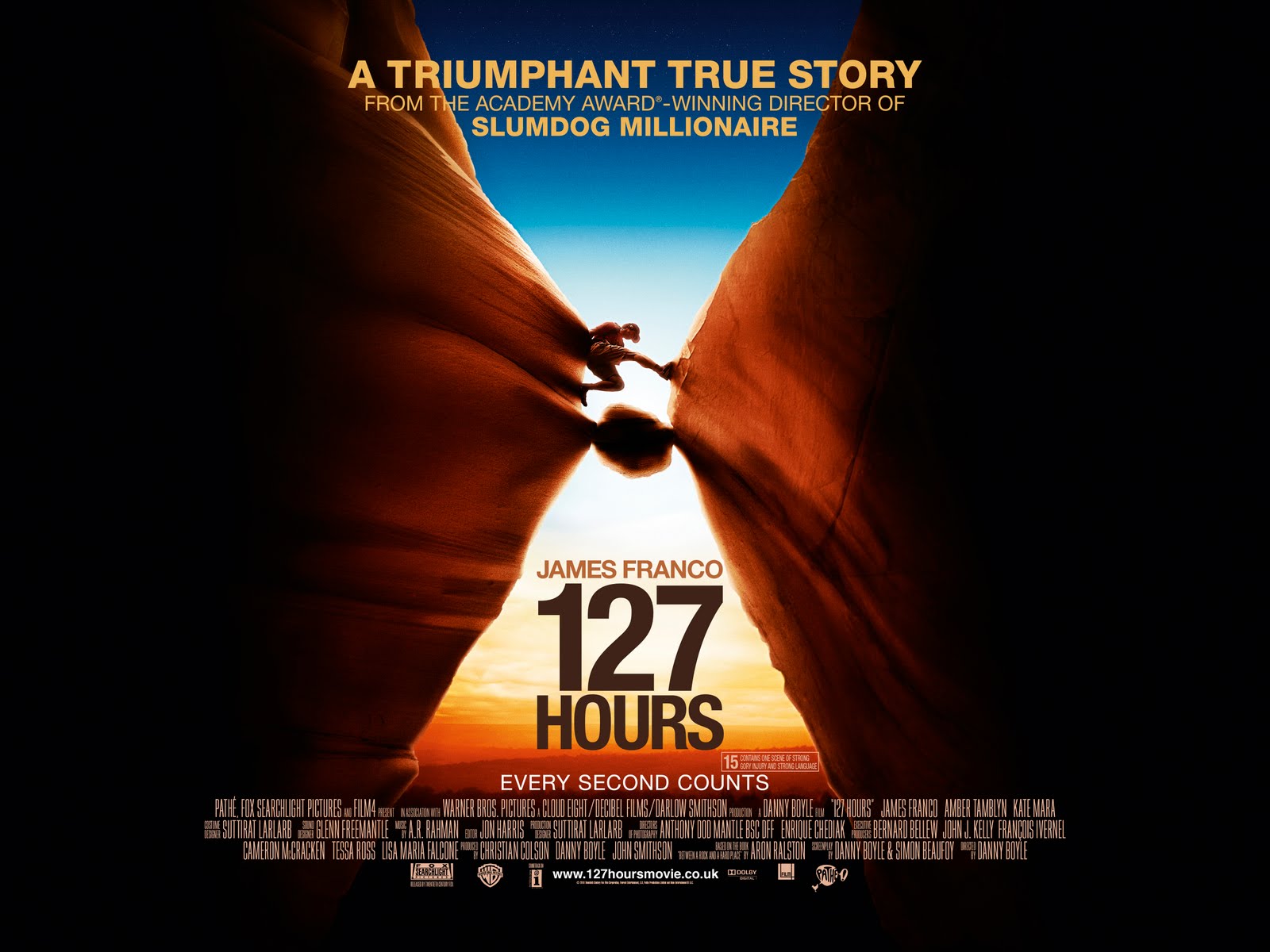
Director(s):                                           Danny Boyle
Writer(s):                                              Simon Beaufoy
                                                                Danny Boyle
Producer(s):                                          Danny Boyle
Composer(s):                                        A.R.Rahman
Actors:                                                   James Franco
                                                                Lizzy Caplan
                                                                Kate Mara
                                                                Amber Tamblyn
                                                                Treat Williams
                                                                Clemence Posey
Distributor:                                           Fox Searchlight
Production Companies:                     Fox Searchlight Pictures
                                                Pathé
                                                Everest Entertainment
                                                Cloud Eight Films
                                                Decibel Films
                                                Darlow Smithson Productions
                                                Dune Entertainment
                                                Big Screen Productions
                                                Warner Bros.
Release Date:                                       November 5, 2010 (limited)
                                                                January 28, 2011 (wide)
Genre:                                                   Drama
Runtime:                                               1 hrs. 33 mins.
MPAA Rating:                                       R/15
Production Budget:                             $18,000,000
Total Lifetime Grosses:                      Domestic: $18,335,230                                        30.2%
                                                                Foreign: $42,403,567                                          69.8%
                                                                Worldwide: $60,738,797
Limited Opening Weekend: $264,851                           (#25 rank, 4 theatres, $66,213 average)
Wide Opening Weekend: $2,136,801                       (#14 rank, 916 theatres, $2,333 average)
Widest Release: 916 theatres
Close Date: April 14, 2011 (161 days / 23 weeks)
Awards:                 AFI Awards, USA 2011, Won (AFI Award), Movie of the Year
                        Broadcast Film Critics Association Awards 2011, Won (Critics Choice Award), Best Song
                        Central Ohio Film Critics Association 2011, Won (COFCA Award), Best Actor, Actor of the Year
                        Dallas-Fort Worth Film Critics Association Awards 2010, Won (DFWFCA Award), Best Actor, Best Cinematography
                        Independent Spirit Awards 2011, Won (Independent Spirit Award), Best Male Lead
                        Las Vegas Film Critics Society Awards 2010, Won (Sierra Award), Best Actor
                        Mill Valley Film Festival 2010, Won (Mill Valley Film Festival Award), Best Narrative Feature
                        Santa Barbara International Film Festival 2011, Won (Outstanding Performance Award)
                        World Soundtrack Awards 2011, Won (Public Choice Award)
                        Writers' Guild of Great Britain 2011, Won (Writers' Guild of Great Britain Award), Best Film Screenplay
Dallas-Fort Worth Film Critics Association Awards 2010, 2nd place (DFWFCA Award), Best Director
                        Southeastern Film Critics Association Awards 2010, 2nd place (SEFCA Award), Best Actor
                        St. Louis International Film Festival 2010, 2nd place (Audience Choice Award), Best Feature


Sunday, 23 March 2014

Section C: Comparative Skills Q3

What is the significance about setting and/or place in your chosen American films?

In film, setting and place can be used effectively to either convey emotion/mood and often reflects the characters thoughts and feelings. Another use would be with how it can foreshadow things to come, e.g. red walls of the room would be a sign of danger, or green could signify jealousy or sickness.

Typical settings for the ‘Lovers on the Lam’ genre are:
·         Mid-west or Southern US
·         Deserts or open plains
·         The Open Road
·         Diners, Motels and Gas Stations
·         Prisons

All of these various settings are in keeping with the genres crime, romance and road trip. The crime would tie in with the prison setting, and perhaps diners or gas stations if they are targeted by the couple. The isolation of deserts/open plains could be a part of the romance; they need no one but each other. Finally the open road setting would be the basis of the road trip genre.

Even though the settings are linked heavily to the hybrid genre that is lovers on the lam, the settings themselves convey meaning particularly in relation to Badlands and Natural Born Killers.

Prisons are used to confine and isolate criminals from the public whether to protect the public or to help them reform. In a certain light, it can be seen as hypocritical of America , in terms of a pioneer state, that, whilst they preach freedom for all, if someone breaks the law, they are imprisoned in tight spaces or are executed and ‘dealt with’.

This consequence for breaking the law differs greatly between the films; there is no prison scene in Badlands, instead we learn that Kit is sentenced to the electric chair and is no longer a problem for the state. In contrast to this, Mickey and Mallory who killed more people with greater violence and bloodlust are merely imprisoned, and eventually escape, implying that they managed to ‘get away’ with murder. This idea of being so high in society or having enough money to not get persecuted for murder reflects how O.J.Simpson managed to be acquitted for killing two people. A similar situation would be the police officers who were also acquitted for the savage attack on Rodney King.

The open road is significant in both films for the freedom the couples feel whilst they avoid capture, a complete opposite to the confinement of the prison that Mickey and Mallory escape from. Most ‘lovers on the lam’ films tend to be set in the Mid-west or Southern US; these are areas that are stereotypical for the ‘love’ of guns (otherwise known as trigger happy). To me, this suggests that by raising children around such lethal weapons, with the knowledge that they would eventually be allowed to legally have a licence for one when they’re older, it conditions the next generation that violence is ‘okay’.

In Badlands, Kit and Holly spend more time in the isolation of the wilderness than they do in the company of other people. Not only is the death count lower due to this, but it also implies that they are reverting back to primary instincts in humans making the killing spree more about survival than killing for the sake of killing. The couple isolate themselves from society for the most part, and, even though Kit is generally treated as a celebrity at the end, they do not have the same fan base as Mickey and Mallory do. Mickey and Mallory spend the majority of their time on the run in towns or cities; this indicates that they are closer to society and have a greater impact: they not only have a large fan group wishing to be them, but Mickey causes a riot in the penitentiary allowing them to escape.
Another place Mickey and Mallory end up is in at least one diner, where they proceed to kill all but one person. Diners are generally considered pit stops during a long journey where people spread news and gossip; this is taken advantage of by Mickey and Mallory as they not only slaughter the people in the diner, a clear message of their presence, but leave one person spare so they can proceed to tell the tale to other people.

Both Mallory’s and Holly’s homes have clear significance in the films. In Badlands Holly lives on a street where quaint houses and white picket fences are the norm, suggesting that on the surface there is nothing wrong. However, when you take into account the dysfunction (her mother’s death) in Holly’s family, it becomes clear that sweet and neat house is nothing more than an illusion to hide what lurks beneath.
Mallory’s home is presented in a similar manner: you have the seemingly pretty house hiding the abhorrence of the dysfunction, namely Mallory’s father. In contrast however, you can clearly see the mark the dysfunction leaves on Mallory in her bedroom; she has sad faces papering her walls indicating her unhappiness either in the house or reality, whilst the bedspread has a single happy face representing the relief and escape she gains in her dreams

Together, Mallory and Holly’s respective homes show that the surface of the pretty house with the picket fence is just a façade to deeper problems beneath.
Overall, the setting/place in Badlands and Natural Born Killers represents the director’s views and opinions on, not only the characters and the symbols of freedom and confinement, but society too.

Sunday, 16 March 2014

Section C: Comparative Skills Q2


How far do the two films you have studied for this topic present similar messages and values?
 
Both Badlands and Natural Born Killers express most, if not all, of the key themes (messages and values) that are associated with the ‘Lovers on the Lam’ genre: the American Dream, the Dysfunctional Family, Rootlessness, Modern Fairy-tale, and Animalistic Nature. The themes are shown in differing ways by the two directors, but each manages to convey the messages they wish to express.

The American Dream is that everybody can become famous/successful from something; this ideal is equally conveyed in both films. In Badlands after his arrest, Kit is being held at an airport and is handing out his personal items and generally treated like a celebrity by the pilots, and even the police officers; this shows the fame he has achieved through murder: he has achieved the ‘American dream’ in a rather bloody manner, but no one seems to care for the lives lost.

This is very similar to Natural Born Killers. As it has been shot in different points of view, Natural Born Killers shows the responses of people across the globe about their opinions of Mickey and Mallory: all seem to be fans of the couple, stating that if they could, they would be Mickey and Mallory. The way the couples are treated almost like heroes, clearly presents the corruption/naivety of society is murder is what it takes to achieve the ‘dream’.

Whilst the idea of the American Dream is presented is a very similar way between the two films, the dysfunctional family theme is presented in separate ways. For Holly, the dysfunction in her family is that her mother passed away, which, though depressing, is a very minor dysfunction in comparison to Mallory’s family. The dysfunction in Mallory’s family is mostly with her father who is presented as a disgusting slob who is abusive to Mallory both mentally and physically. Even though the heart of the problem is with her father, her mother is also a part of the dysfunction; she does nothing to protect her children from their father. This results in a very large contrast between the two presentations of the dysfunctional family in the films.

 Love plays a great part in the themes, and this is typically shown through the idea of the Modern Fairy-tale: in essence, love conquers all. In the opening scene of Natural Born Killers, there is a moment after Mickey and Mallory kill the people in the diner where romantic music plays as the couple dance, fading the screen into an image of fireworks in the sky. This is a very clear way of saying that they are so in love, that they have created their modern fairy-tale through bloodshed.

Personally however, I feel that the idea of the modern fairy-tale does not show in Badlands; Kit and Holly appear to be together mostly out of obligation instead of love – this is particularly evident when Holly leaves Kit to turn herself in. Although it does not have the evidence for modern fairy-tale, the roles are reversed for Rootlessness; this is not a theme that I have so far seen clearly in Natural Born Killers. Kit is a very mysterious person; we know nothing of his past, or family – the only hint we get towards it is close to the end when he states that he always wanted to be a criminal. Another example of the rootlessness in Badlands would be after Kit kills Holly’s dad, resulting in Holly having nothing left to keep her from being with Kit.

The final theme that I can see appears in both films is animalistic nature. In Badlands, Kit and Holly end up living in the wilderness for a while, and seem to almost revert to their primary instincts throughout this time. Though the theme of animalistic nature is hinted at in Badlands, in Natural Born Killers it is very clearly shown: there are frequent shots, particularly in the opening scene, of various predators, true natural born killers.

I personally believe that the both Badlands and Natural Born Killers present very similar messages and values through the key themes that are associated with the ‘Lovers on the Lam’ genre.

Sunday, 9 March 2014

Section C: Compartive Skills


How far do the American films you have studied for this topic depend on well-established narrative and/or genre conventions?

‘Genres are created through a process of repetition and recognition leading to anticipation and expectation’ – Graham Burton (2000)

Badlands and Natural Born Killers both depend on genre conventions and well-established narrative to help engage the viewer into the films, as well as convey symbols and ideas to the audience. However, whilst Badlands introduces the more important genre conventions, it seems to rely mostly on the narrative, particularly with Holly’s voice over. In contrast, from the scenes I have seen so far from Natural Born Killers, the director focuses on inputting as many genre conventions as possible for the ‘Lovers on the Lam’ theme.

The most obvious genre conventions for a crime/romance/road trip hybrid, are the locations – these vary between open plains to diners/motels – the props and clothing (denim, cars, and weapons), all the technical parts of it (low-key lighting, two shots) and finally the characters, the main two being the lovers as well as other characters that act as obstacle for the couple to overcome; this is usually a family member. In Badlands, it was the father only, but his death seemed rather accidental rather than planned, and Holly plays little part in it. This is very different to Natural Born Killers as not only was the father murdered, but the mother was too – Mallory was the reason their deaths occurred, not to mention she clearly enjoyed and aided Mickey.

Both Badlands and Natural Born Killers are loosely based upon the Charles Starkweather murders in 1958, which began with the deaths of his girlfriend’s family. Natural Born Killers was released at the time of the O.J.Simpson case as well as the Rodney King incident which began the L.A riots.

Whist the pace of the films are vastly different (Badlands being a very slow film, with Natural Born Killers as a polar opposite), the focuses are also varied: Badlands follows Kit and Holly’s time on the run, focusing more on the killers than any other aspect. As a result, the locations are generally in barren desert areas as they work to avoid the police after Kit kills Holly’s father. The crime in it is kept to a minimum – any murders shown are rather restrained, in keeping with the rest of the film – and instead relies more on expressing the emotions of the characters and their relationship.


Badlands has a very subtle use of conventions unlike Natural Born Killers which seems to overkill the main conventions based on what I have seen so far. Another contrast would be that the film focuses on the killing and the repercussions, as well as the idea that everyone is corrupt, meaning that society is also placed under analysis throughout the film.

Both of the films have the same reason behind the beginning of the killing spree road-trip: a dysfunctional family. With Holly, it was the basis on her mother’s death, but with Mallory it is the abuse she receives at the hands of her father and how her mother refused to intervene. Hence the contrast between the violence of the murders: a simple bullet for Holly’s father, but being beaten then drowned, and burning to death at the hands of your child for Mallory’s parents.

The dysfunctional family is the spark for the films, both follow the key themes of the ‘American Dream’, modern fairytale and the animalistic nature (this seems particularly evident in Natural Born Killers; the opening scene is filled with shots of natural predators). These themes are the ideals of the lovers, not to mention incentives to follow the path of crime.

One point about the relationship between the characters is how it is clear that, from what I’ve seen, Mickey and Mallory appear to have stronger feelings towards each other than Kit and Holly. In my opinion, the directors are trying to show the naivety in Holly (and possibly Kit) by having the characters mistake the obligation that they have to be together for love.

The film narratives are clear in contrast: Badlands is a very linear storyline, though it does seem to be reflected upon by Holly throughout the film, as her voice over hints at how the film would progress and end, not to mention how the society ended up treating the couple. Natural Born Killers however, appears to be a non-linear storyline, and, typically, these types of narrative contain flashbacks.

In my opinion, Badlands, whilst it contains a variety of genre conventions, depends more upon its well-established narrative. In comparison, from what I have seen of the film, Natural Born Killers relies more upon the genre conventions to the point of overkill in an attempt to satirize the genre.